




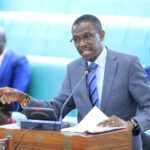



A heated parliamentary exchange erupted after Leader of the Opposition Joel Ssenyonyi linked Uganda’s Protection of Sovereignty Act to the weakening shilling and concerns over foreign investment.
Ssenyonyi argued that concerns surrounding the law could discourage foreign players from investing in Uganda, amid fears that some could be labelled economic saboteurs.
His remarks came during a parliamentary discussion on the continued depreciation of the Ugandan shilling and rising economic pressures. Parliament reported that Ssenyonyi cited an earlier warning by Bank of Uganda Governor Michael Atingi-Ego that the proposed sovereignty legislation could affect Uganda’s foreign exchange inflows and put pressure on the currency.
However, Deputy Speaker Thomas Tayebwa pushed back against attempts to distance MPs from the legislation after it had been passed by the House.
Tayebwa reminded Ssenyonyi that once Parliament passes a law, it becomes a decision of the institution rather than a law belonging to either the ruling party or the opposition.
“When we make resolutions of the House, they become resolutions of the House, including those who agreed and those who disagreed,” Tayebwa said.
He said MPs who were unhappy with provisions in the law should use parliamentary procedures to seek amendments instead of disowning legislation that had already been passed.

Tayebwa suggested that lawmakers could introduce a private member’s bill if they wanted to amend the Act.
“Once we agree and we pass a law, we all own it up,” he said.
Ssenyonyi, however, maintained that Parliament’s passage of legislation does not erase the objections raised by MPs who opposed it during debate.
The Protection of Sovereignty Act, 2026 was passed by Parliament in May after significant amendments and was assented to by President Yoweri Museveni on May 17, 2026, coming into force on May 22. The law provides for the registration and regulation of agents of foreigners and regulates funding and other assistance to such agents.
The legislation was significantly scaled back during parliamentary consideration following concerns about its potential economic impact. Among the changes, Parliament introduced a declaration regime for certain foreign funding instead of the broader prior-approval system contained in the original proposals. Lawful financial flows, including foreign direct investment, trade and humanitarian assistance, were also explicitly protected.
Bank of Uganda had earlier warned that the original version of the legislation could weaken the shilling and reduce foreign financial flows, including investment and remittances.
The latest exchange shows that disagreements over the law remain alive in Parliament, with opposition concerns over its possible economic effects now being debated alongside the wider challenges facing Uganda’s currency and cost of doing business.
Related posts:
 BoU Governor Michael Atingi-Ego Warns Sovereignty Bill Could Trigger Economic Shock, Weaken Shilling
Uganda’s Economy Soars as Shilling Named World’s Most Stable Currency
Mao Defends Sovereignty Bill, Says Law Targets ‘Weaponized’ Actors Not Ordinary Ugandans
BoU Governor Michael Atingi-Ego Warns Sovereignty Bill Could Trigger Economic Shock, Weaken Shilling
Uganda’s Economy Soars as Shilling Named World’s Most Stable Currency
Mao Defends Sovereignty Bill, Says Law Targets ‘Weaponized’ Actors Not Ordinary Ugandans
 Joel Ssenyonyi in Trouble: Parliament Grants Dennis Namara Leave for bill seeking to change LoP selection