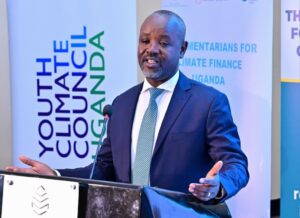
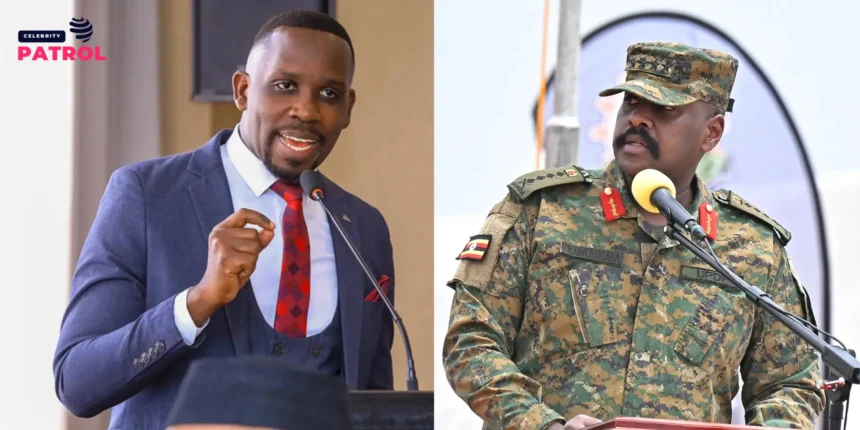
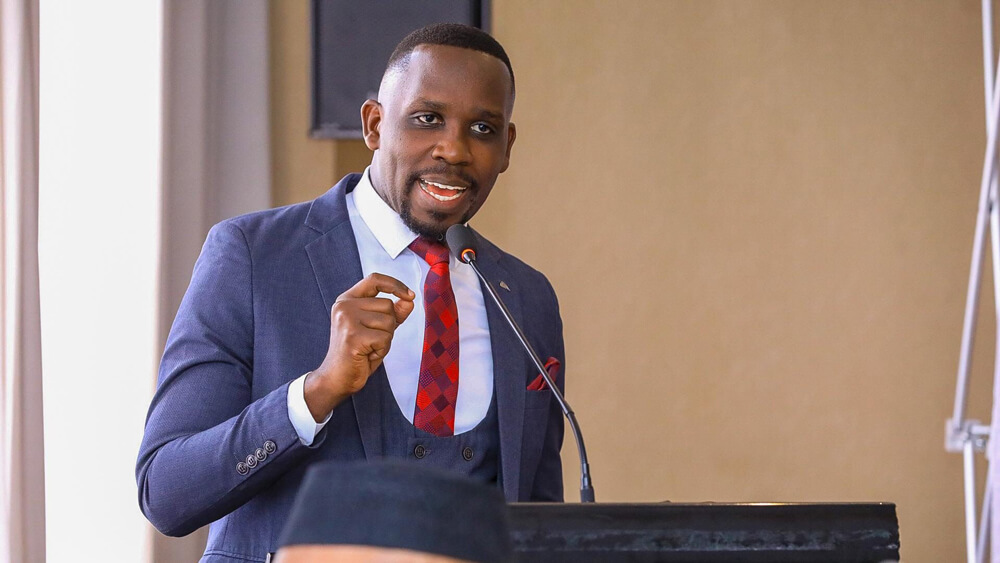
The Chief of Defence Forces Gen. Muhoozi Kainerugaba has publicly directed members of the Patriotic League of Uganda (PLU) to explore ways of removing Leader of the Opposition Joel Ssenyonyi from his parliamentary position.
The controversial directive has sparked debate across Uganda’s political landscape, with opposition supporters questioning whether the military chief is overstepping into matters traditionally handled by Parliament and political parties.
The development follows recent criticism by Ssenyonyi, who accused Gen. Muhoozi of presiding over what he described as increasing human rights violations, enforced disappearances, and growing disregard for the rule of law.
The Nakawa West MP also called on President Yoweri Museveni to hold his son accountable for his public statements and actions, remarks that appear to have further escalated tensions between the opposition and the First Family.
In a series of public statements, Muhoozi not only targeted Ssenyonyi but also declared that he would personally determine who becomes Uganda’s next Leader of the Opposition.
More Read
The outspoken military chief further claimed that Ssenyonyi and former Kira Municipality MP Ibrahim Ssemujju Nganda would “follow very soon,” comments that immediately attracted widespread attention and criticism from opposition figures.
His remarks came on the same day security agencies arrested former Kampala Lord Mayor and president of the People’s Front for Freedom (PFF), Erias Lukwago, a development that intensified concerns among government critics about what they describe as increasing pressure on opposition leaders.
Political analysts note that under Uganda’s parliamentary system, the position of Leader of the Opposition is traditionally determined by the largest opposition party represented in Parliament. Currently, that position belongs to the National Unity Platform (NUP), which holds the biggest opposition presence in the House.
As a result, Muhoozi’s remarks have raised questions about how such a process could be influenced by external political actors.
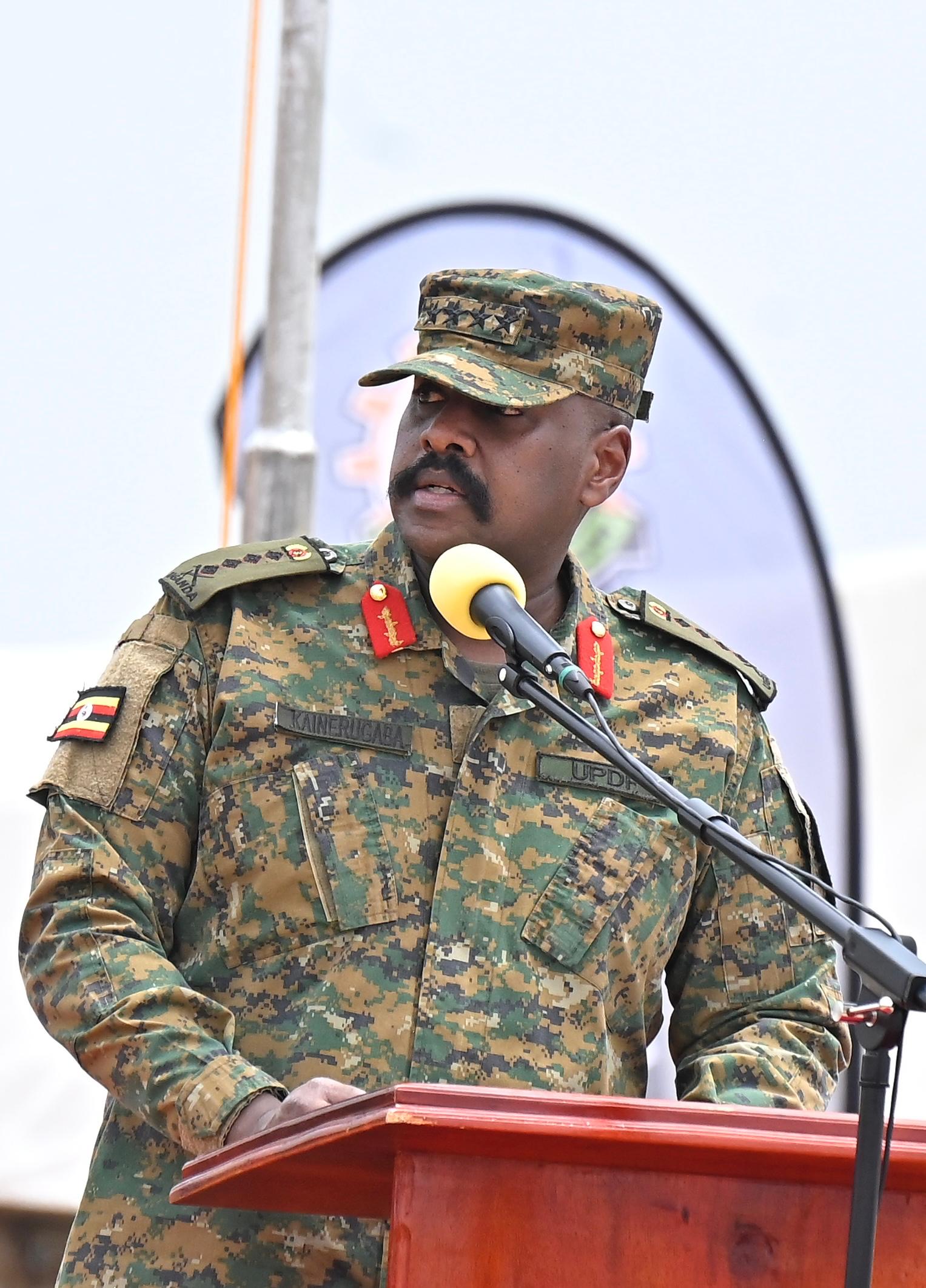
The controversy has also placed renewed focus on the growing visibility and influence of the Patriotic League of Uganda, a movement that has increasingly become active in national political affairs despite not being a registered political party.
More Read
Critics argue that Muhoozi’s continued involvement in political debates while serving as Uganda’s top military officer blurs the line between military leadership and partisan politics.
Supporters of the general, however, maintain that he is exercising his constitutional right to express political opinions and engage in national discussions.
The latest remarks are expected to fuel further debate about political freedoms, democratic institutions, and the role of security actors in Uganda’s governance landscape as the country navigates a politically charged period following the 2026 general elections.