
The Ugandan government has officially rolled out its revised public service salary structure for the 2026/27 financial year, revealing the country’s highest-paid public officials as new pay rates take effect from July 1.
The revised salaries, contained in the Ministry of Public Service’s Circular Standing Instruction (CSI) No. 3 of 2026, are part of a wider salary enhancement programme backed by a Shs 9.7 trillion public wage bill, with priority given to scientists, technical professionals, health workers, judicial officers and security personnel.
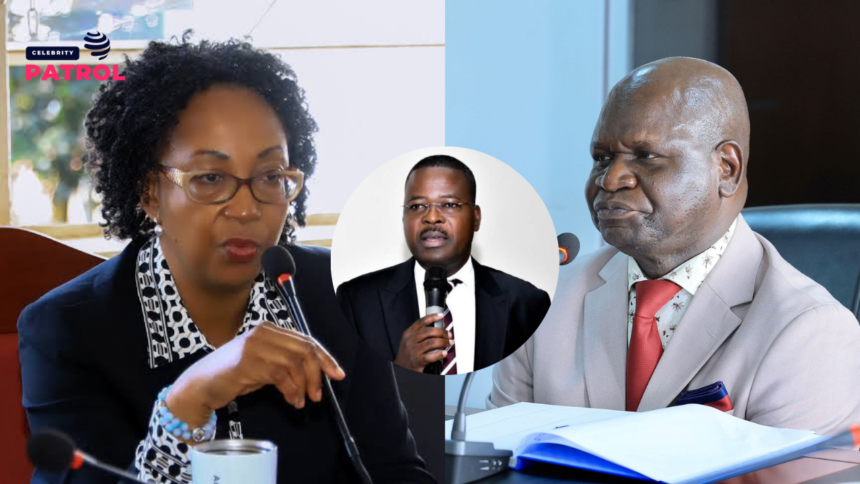
According to the new structure, the Inspector General of Government (IGG) remains Uganda’s highest-paid public official, earning a monthly gross salary of Shs 37 million.
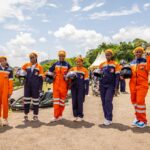
The Auditor General follows closely with Shs 36.1 million, while several senior officers attached to the Presidential Aviation Crew dominate the rankings due to the highly specialized nature of their work.
The Judiciary also features prominently, with both the Chief Justice and Deputy Chief Justice ranking among the country’s top earners.
More Read

Uganda’s Top 10 Highest-Paid Public Officials (FY 2026/27)
- Inspector General of Government (IGG) – Shs 37,000,000
- Auditor General – Shs 36,100,000
- Executive Director, Presidential Aviation Crew – Shs 32,165,547
- Deputy Inspector General of Government – Shs 32,000,000
- Chief Pilot, Presidential Aviation Crew – Shs 30,257,813
- Chief Engineer, Presidential Aviation Crew – Shs 29,376,518
- Captain, Presidential Aviation Crew – Shs 28,520,891
- Pilot, Presidential Aviation Crew – Shs 27,690,185
- Chief Justice – Shs 26,500,000
- Deputy Chief Justice – Shs 25,000,000
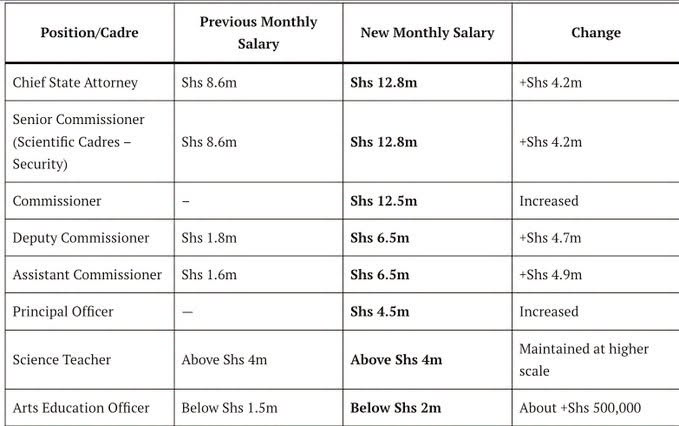
While the latest salary review significantly increased earnings for Chief State Attorneys, Senior Commissioners, Commissioners, and other technical officers, those positions still fall outside the country’s overall top 10 highest-paid public offices.
The revised pay structure also continues to generate debate over salary disparities within the public service. Although scientists and technical professionals received some of the largest increments, many arts teachers and humanities-based public servants saw comparatively smaller increases, prompting renewed calls for salary harmonization across all government sectors.