


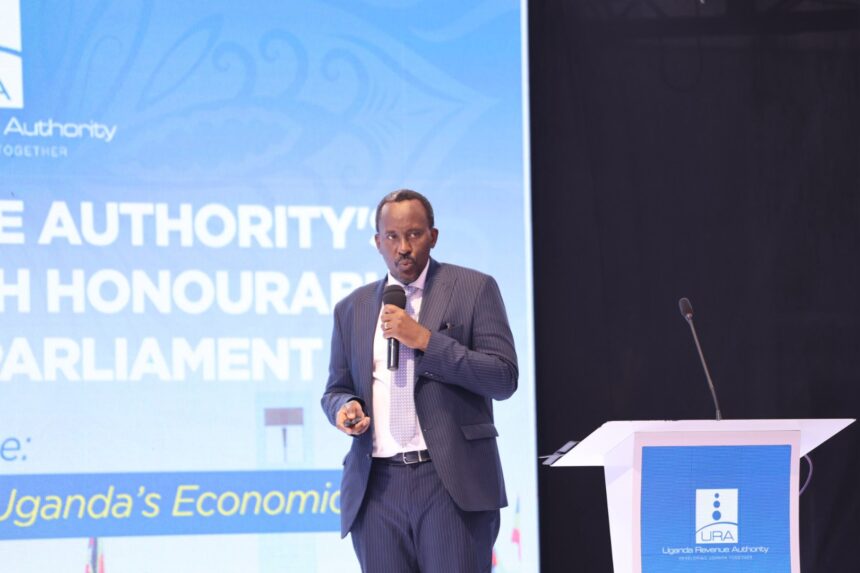
The Uganda Revenue Authority (URA) has officially launched the transition from Tax Identification Numbers (TINs) to National Identification Numbers (NINs), marking a major change in how taxpayers will be identified.
The initiative was launched on Tuesday, September 29, 2026, during the My Identity Expo and Symposium 2026 at Kololo Ceremonial Grounds in Kampala, with Internal Affairs Minister Ephraim Kamuntu officiating at the launch.
Under the new system, the NIN will serve as an individual’s taxpayer identifier, with existing TIN records being mapped to national identification records. URA Commissioner General John R. Musinguzi Rujoki said the reform is intended to address challenges associated with duplicate TINs and unauthorised access to taxpayer accounts.
Musinguzi said the previous system made it possible for one individual to hold multiple TINs, making it difficult for URA to consistently link a person to their tax obligations. The integration with NIRA’s identification system will use biometric information to strengthen verification.
URA says the transition is part of a broader effort to improve domestic revenue mobilisation and strengthen taxpayer identification. The authority has set a target of increasing Uganda’s tax-to-GDP ratio from about 14 percent to at least 20 percent over the coming years.
More Read

The reform is also expected to extend biometric verification to businesses, while URA continues upgrading its digital systems and services.
Importantly, URA has previously clarified that having a NIN does not automatically make every Ugandan a taxpayer. The authority says the transition is primarily intended to improve identification and the accuracy of taxpayer records, while tax obligations will continue to depend on applicable laws.
The transition follows a Cabinet decision approving the move from the standalone TIN system to an identification framework anchored in the national identification system.
The initiative forms part of Uganda’s wider push to make NINs a common identifier across government services. At the My Identity Expo, Minister Kamuntu described reliable identification as important for government planning, service delivery, financial inclusion and national security.
URA’s move therefore represents a significant step toward linking national identification with tax administration, while the authority works to improve the accuracy of taxpayer records and revenue collection.
More Read

Contemporary issues in Uganda’s taxation landscape
Continuation of Commissioner General, John R. Musinguzi’s presentaion.
It should be noted that the tax base is changing because of :
1️⃣ Structural informality unregulated sectors whose economic activity remains outside formal… pic.twitter.com/khfI9xeeFK— Uganda Revenue Authority (@URAuganda) September 29, 2026