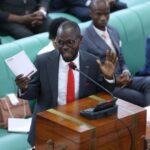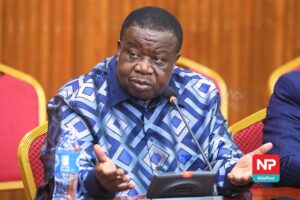



Failed Ugandan politician and businessman Abraham Luzzi, popularly known as “Mr. Economy,” has come out and proposed that all land in Uganda should belong to the government and not to individuals.
The controversial proposal has sparked strong reactions from political commentators, cultural leaders, economists, and ordinary citizens, many of whom fear the idea could reopen painful chapters in Uganda’s history.
Luzzi, who is known for his investments in gold mining and commercial agriculture, argued that private land ownership continues to slow down major infrastructure projects, urban planning, industrialization, and large-scale farming.
According to him, government ownership of land would make it easier to implement development projects without lengthy disputes, compensation battles, and land conflicts that often delay investment.
However, critics were quick to reject the proposal, warning that Uganda has previously experimented with similar policies with devastating consequences.
More Read


Many pointed to former President Idi Amin’s 1975 land nationalization policies, which saw extensive state control over land and property. Critics argue that the move contributed to economic decline, reduced agricultural productivity, forced evictions, and widespread uncertainty over property rights.
Several commentators noted that Uganda’s 1995 Constitution deliberately restored land rights to citizens, recognizing customary, freehold, mailo, and leasehold tenure systems after years of political and legal battles.
The proposal has also generated strong reactions in Buganda, where land ownership remains deeply tied to culture, identity, and heritage.
Some critics questioned why such a fundamental constitutional change would be discussed through political statements rather than formal parliamentary processes.
Others warned that excessive state control of land has historically failed in various countries and could discourage investment, reduce agricultural output, and create new forms of corruption.
More Read

Supporters of reform, however, argue that Uganda’s land sector still faces serious challenges, including fraudulent titles, land grabbing, overlapping ownership claims, and underutilized land.

Rather than nationalizing land, some analysts have suggested alternative reforms such as digitizing land records, improving land administration, strengthening property rights, and introducing taxes on idle land to encourage productive use.
The debate comes at a politically sensitive time as the country moves closer to another election cycle, with land remaining one of Uganda’s most emotional and politically charged issues.
For millions of Ugandans whose livelihoods depend on farming and land ownership, the proposal has reignited old fears while also opening fresh conversations about the future of development, investment, and property rights in the country.
We ask General @mkainerugaba to amend the land law so that the government owns all land. This will allow proper planning for the country because individual land ownership hinders development. The government should take over the land, build estates for low, middle and high income… pic.twitter.com/RfudFQsMZ1
— Abraham Luzzi (@agribussiness1) June 22, 2026